



Over a five-day period, the Federal Government has predicted severe rains that might cause floods in 76 areas and 19 states.
The Federal Ministry of Environment’s National Flood Early Warning Systems Centre issued the warning on Tuesday, urging citizens and stakeholders to take immediate preventative action.
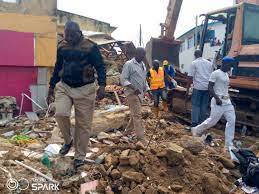
This occurs as disastrous flooding hit Ogun and Gombe states on Tuesday. The tragedy also devastated Lagos, Plateau, Anambra, and Delta states.
Our reporter was able to receive the center’s flood forecast, which states that between August 5 to August 9, 2025, rainfall is anticipated to produce flooding in the concerned districts.
Akwa-Ibom (Edor, Eket, Ikom, Oron, Upenekang); Bauchi (Tafawa-Balewa, Azare, Jama’are, Kari, Misau, Jama’a); Ebonyi (Abakaliki, Echara, Ezilo); Cross-River (Ogoja Edor, Obubra); Nasarawa (Keana, Keffi, Wamba); Benue (Agaku, Buruku, Gboko, Igumale, Ito, Katsina-Ala, Ugba, Vande-Ikya); Kaduna (Jaji, Kafancha, Birnin-Gwari, Zaria); and Katsina (Bindawa, Bakori, Daura, Funtua) are the anticipated states and locations.
The others are the following: Niger (Kontagora, Rijau, Ringim); Plateau (Mangu); Taraba (Donga, Takum); Jigawa (Diginsa, Gumel, Dutse, Gwaram, Hadejia, Miga); Yobe (Machina, Potiskum); Zamfara (Anka); Sokoto (Sokoto, Wamakko); Borno (Biu); and Kano (Bebeji, Gezawa, Gezawa, Gwarzo, Kano, Karaye, Tundun-wada, Ribah, Sakaba, Saminaka, Yelwa, Gauri-Banza; and Niger (Kontagora, Rijau, Ringim).
In Nigeria, flooding has become a regular event that ruins many houses and takes lives. According to reports, floods struck 31 states last year, killing hundreds, hurting thousands, and impacting 1.2 million people.
The Alau Dam fell on September 10, 2024, resulting in floods in Borno State that killed at least 150 people, displaced 419,000 others, and submerged 70% of the population.
This year has seen a number of flooding incidents around the nation that have resulted in property damage, deaths, injuries, and relocation. In May, Mokwa, Niger State, had the worst flood of the year, which is said to have killed at least 200 people and left others homeless.
The floods, which were brought on by heavy rains and made worse by the collapse of a dam, devastated a large area and made it difficult for the locals to get basic services.
In 2025, flooding also occurred in various regions of Nigeria, with Mokwa being the most badly hit.
In addition to putting millions of people at danger, the flooding hit many states, notably Rivers State, where heavy rains created landslides and floods that carried people away and buried houses in the city of Okrika, killing at least 25 people.
The regular water flow from the Jebba Hydroelectric Power Station dam caused flooding in 30 towns in April, resulting in the destruction of rice crops and the deaths of at least 13 persons in Kwara State and Mokwa, including three in a canoe that overturned on a flooded river.
The release of intervention funds to assist with flood prevention and response operations around the country was recently authorized by the National Economic Council.
NEC authorized N1.5 billion for the Federal Ministry of Budget and National Planning, N1.5 billion for the Federal Ministry of Environment, N1.5 billion for the Federal Ministry of Water Resources and Sanitation, N3 billion for each of the 36 states and the Federal Capital Territory, and N10 billion for the National Emergency Management Agency.
According to a dashboard made public by NEMA last Friday, this year’s floods has left at least 165 people dead, 82 people missing, and 119,791 people impacted.
Additionally, the government said that 8,594 homes were impacted, 43,936 people were displaced, 138 people had different degrees of injury, and 8,278 farmlands were devastated in 43 Local Government Areas throughout 19 States.
The organization said the majority of those impacted were women and children.
“191 deaths”- NEMA
According to a recent report from the National Emergency Management Agency, the floods that have devastated sections of the nation in 2025 have claimed at least 191 lives and left 94 more unaccounted for.
According to the statistics our reporter was able to receive on Tuesday, Niger State had the largest number of fatalities—163—followed by Adamawa State, which had 26. The states of Borno and Gombe each reported one fatality.
According to the statistics, 134,435 individuals have been impacted by the floods so far this year in 20 states and 47 local government units.
Abia, the Federal Capital Territory (Abuja), Adamawa, Akwa Ibom, Anambra, Bayelsa, Borno, Delta, Edo, Gombe, Imo, Jigawa, and Kaduna are among the states that are impacted. Kano, Kogi, Kwara, Niger, Ondo, Rivers, and Sokoto are the others.
There have also been reports of 239 injuries and 48,056 displaced individuals. In addition, 9,499 homes and 9,450 farmlands have been impacted by the floods.
Additionally, NEMA’s dashboard showed that there are 1,874 people with impairments, 60,071 children, 27,121 males, 41,539 women, and 5,704 senior people among those impacted.
5,264,097 people were impacted by the floods in 2024, which forced 1,243,638 people to relocate throughout 35 states and 401 local government entities. 16,469 people were hurt and 1,237 people died as a consequence of the tragedy.
Additionally, 1,439,296 hectares of farmlands were impacted, and 116,172 dwellings were demolished, making the flooding’s humanitarian and economic effects much worse nationwide.
Heavy rains that started Monday night and continued into the early hours of Tuesday caused flooding in parts of Ogun and Gombe states.
The PUNCH said that residents, schoolchildren, and visiting churchgoers attending the annual conference of the Redeemed Christian Church of God were detained for hours at Redemption City, located along the Lagos-Ibadan Expressway in Mowe, Ogun State, when floods flooded portions of the region.
Estate 15 was among the most severely affected, with several cars totally flooded. Residents who were stranded were forced to give up their automobiles and turn to boats as a makeshift mode of transportation.
To assist in moving people into and out of the building, RCCG authorities responded by deploying Type D school buses.
A resident named Tunde told The PUNCH, “I was trapped inside the RCCG camp this (Tuesday) morning and couldn’t leave for work until a special luxurious bus provided by the church came to pick me and others.”
The similar thing happened in the state’s OPIC region, where the floodwaters wrecked houses and interrupted activity.
Haruna Abdullahi, the Executive Secretary of the State Emergency Management Agency, reports that at least four people perished in Gombe as a result of flooding, windstorms, and rain.
About 278 homes, including both farmlands and persons, were impacted, he said.
According to Abdullahi, the most recent incidence occurred in the local government areas of Kwami, Dukku, Billiri, Gombe, Yalmatu-Deba, and Akko.
Four people were reported deceased, two from the Gombe Local Government Area, one from Dukku, and one from Kwami LG. Approximately 278 families were impacted, mostly by windstorms and flooding of pastures and a few homes. The majority of the fatalities were brought on by broken walls.
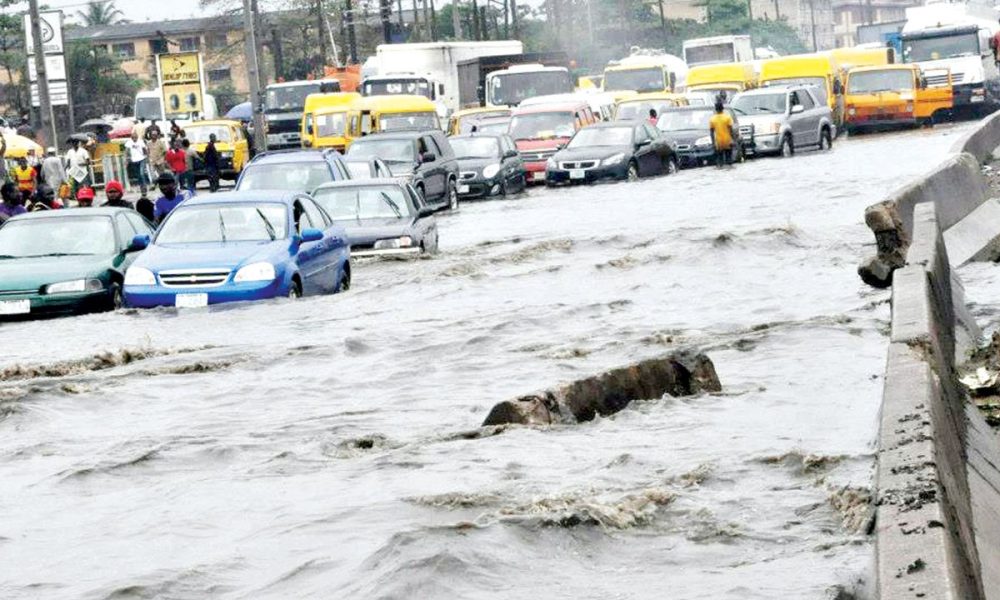
Following a night of nonstop rain, flash floods raced across residential and business sectors on Monday, leaving thousands stranded and severely impairing economic activity in the biggest metropolis in Nigeria.
In both Lagos Mainland and Lagos Island, the rain, which started late Sunday and became stronger during the early hours of Monday, overloaded drainage systems and caused roadways to become rivers.
Ijede in Ikorodu, Lekki, Surulere, Agege, Ajegunle, Alimosho, and Eti-Osa were among the neighborhoods that were flooded by daybreak. Ijede’s viral footage showed folks swimming over what used to be roadways while waist deep in floodwater.
In a particularly moving video, a barefoot Oko Ope lady called for government action in Yoruba, saying, “The water is everywhere,” as her house had been swamped. We’re not even allowed inside. We’ve lost everything.
Floodwaters infiltrated booths at large markets, ruining merchandise and forcing traders to leave their establishments. With main highways flooded and transportation systems interrupted around the city, commuters were left stuck for hours.
The hashtags #LagosFlood and #IjedeTragedy went viral on social media as locals shared images of flooded living rooms, drowned cars, and submerged schools, reinforcing demands for a permanent solution to Lagos’s ongoing flooding problem.
Lagos is susceptible to yearly floods due to a mix of inadequate urban design, obstructed drainage systems, and uncontrolled building in water-prone areas, despite several assurances from state authorities over the years.
As of Monday, residents of the Sapele and Oko towns in Delta State were facing severe floods. Following the submersion of portions of their villages, several inhabitants have already begun to relocate.
Flood victims bemoaned the destruction of their homes and the interruption of their daily routines, pleading with the authorities to act quickly.
During his on-the-spot inspection in Sapele, Mr. Jamani Ejiro, the Delta State Commissioner for Environment, offered his condolences to the impacted locals. He gave them his word that the state government would act quickly to ease their pain.
Residents of Oko settlement, which is in Oshimili South LGA, referred to the yearly floods as a persistent threat and demanded a long-term solution.
We’ve had enough of this annual agony. One person said, “We need drainage systems, not just hollow promises.”
In a parallel move, Ejiro said Tuesday that the Delta State Government has set up six fully furnished IDP camps in preparation for extensive flooding.
Ejiro told reporters that the preventive action was a reaction to the Nigerian Meteorological Agency’s forecast of significant rainfall and potential floods in many regions of the state.
He claims that the IDP camps at Kwale, Ozoro, Patani, Bomadi, Uto-Jeremi, and Asaba have been carefully placed in high-risk, flood-prone regions to provide impacted people prompt refuge and assistance.
The commissioner said, “To ensure the safety and comfort of displaced persons, these camps are fully equipped with modern facilities, including sick bays, security units, kitchens, and other essential amenities.”
Ejiro also revealed that Dr. Kingsley Emu, the Secretary to the State Government, is in charge of the Flood Disaster Management Committee that the state government has established. According to him, the committee’s job is to work closely with local officials to raise awareness among inhabitants of flood-prone areas about the need of moving when required.
“We want to make sure that avoidable causes don’t claim lives. We will relocate impacted people to these camps as necessary,” Ejiro promised.
The declaration was made when the severe effects of seasonal floods are still being felt in a number of Nigerian towns, notably Delta State.
A three-hour rain in Diggi town, Bunza Local Government Area, Kebbi State, caused several houses to get submerged and forced scores of families to relocate.
Witnesses said that uncontrolled streams in the area caused the flood to rush in. One resident described it as “like a monster.” “Everything was lost in a matter of minutes.”
The Kebbi State Government instructed local officials and its emergency agency to provide aid right away. According to Ahmed Idris, the governor’s chief press secretary, supplies like as food, bedding, and medical equipment are already being mobilized.
In addition to urging residents to maintain clean drains and rivers, community leaders are requesting that corporations, NGOs, and affluent people support the recovery efforts.
Many people of the Bagel hamlet in Dass Local Government Area in Bauchi State were left homeless as a result of extreme floods. The water damaged at least 13 homes.
The incidence was verified by Yusuf Makama, the Chairman of Dass LGA’s Special Assistant on Media. He said that Chairman Mohammad Jibo has agreed to provide relief supplies after visiting the area and evaluating the damage.
“He urged the federal and state governments, along with non-governmental organizations, to assist the victims,” Makama said.
A severe rainfall on Sunday caused extensive damage to at least 50 houses, two elementary schools, and a worship center in the Menkaat hamlet in Shimankar District, Shendam LGA, Plateau State.
Residents who were impacted told The PUNCH in Jos on Tuesday that the level of devastation was “overwhelming.”
“We’ve been severely impacted. Local resident Lawrence Longwalk remarked, “Our houses of worship, schools, and homes were all destroyed.” “We lost everything,” said Mrs. Akwe Hannatu, another victim. We have nowhere to go since our house was damaged.
Residents claim they have not yet received any real help, despite reports that the State Emergency Management Agency has been notified and intends to visit the region.
The National Emergency Management Agency in Imo State verified that floods had flooded 27 communities in the Oguta Local Government Area. In addition, flash floods were recorded in areas of Owerri West LGA, including Oforola, Avu, New Owerri, and the Akachi region, and seven communities in Ohaji/Egbema LGA, including Olokwu, were also impacted.
Amanze Okoro, a farmer, told The PUNCH that he and his family were forced to temporarily move to Owerri to live with their in-laws. “There was nothing we could do. Water totally overtook our home and property,” he added.
Parts of Port Harcourt and Obio/Akpor LGAs in Rivers State have experienced flash flooding as a result of the ongoing rains. Amaechi Drive in GRA, Odili Road, and the Obi Wali axis in Rumuigbo are among the impacted areas.
Dr. Fyneface Dumnamene, an environmental rights campaigner and the Executive Director of the Youths and Environmental Advocacy Center, encouraged the government to impose a state of emergency in regions that are vulnerable to flooding.
These days, flash floods happen often. We need rapid government intervention, community sensitization, and emergency drainage cleaning. In a phone conversation with The PUNCH, Dumnamene said, “We can’t stop the rain, but we can stop the suffering.”
Residents nationwide are preparing for further suffering as the Nigerian Meteorological Agency predicts additional rain in the next weeks. Environmental specialists caution that Nigeria will continue to experience the catastrophic effects of periodic floods in the absence of proactive infrastructure investment, disaster planning, and community education.
Primary and secondary schools in Katsina State have been designated as temporary shelters by the state administration in response to NiMet’s forecast of potential flooding in the Daura, Jibia, Funtua, and Bakori LGAs.
Local emergency committees in each of the 34 LGAs have received training on how to react quickly to flood situations, according to Binta Hussaini Dangane, Executive Secretary of the State Emergency Management Agency.
“While awareness campaigns are ongoing, the government has procured food and non-food items,” she added, advising citizens to remove clogged drainages and refrain from disposing of trash in rivers.
Flood control measures, particularly in Yenagoa, have so far avoided major flooding in Bayelsa State despite heavy and prolonged rains.
Reconstruction initiatives like the culvert at Osiri Road in Ekeki and the continuous desilting of natural drainage channels are credited by officials. The state is still “ready and proactive,” according to Chief Walson Omusu, head of the Bayelsa Flood and Erosion Control Directorate.
After days of intense rain that left several towns in the state devastated, the Sokoto State Emergency Management Agency and the National Emergency Management Agency have started a collaborative flood damage assessment.
The most impacted local government regions, Yabo, Shagari, and Tureta, where hundreds of people have been evacuated, houses have been swept away, and farmlands have been inundated, were visited by assessment teams.
Whole settlements, including Shiyar Hegin-Rafi, Shiyar Sarkin Fawa, Shiyar Ubandoma, Shiyar Ubandawaki (Garkar Audu), and Kofar-Bai, were devastated by flooding in Yabo LG.
89-year-old Malam Bango Altine lost five rooms, while Muhammadu Dan Nanuwa’s six rooms were totally destroyed. Significant damage was also done to the Sarkin Kabin Yabo’s palace.
Over ten settlements in Shagari LG were impacted, including Lambara, Kambama, Jaredi, Kajiji, and Lokoko. Concerns about food insecurity were raised by the submersion of large tracts of cropland in Illela-Chofal. Ibrahim Abubakar, the disaster desk officer, and other local authorities reported widespread damage to houses and crops.
More than 250 people were displaced by floods in Inwala, Shiyar DanDile, and Lambar-Tureta in Tureta LG between July 23 and 25. Salisu Muhammad, a Federal Road Safety Corps officer, had his house destroyed, and two ladies were hurt in a building collapse. Chairman of Tureta LGA, Hon. Aliyu Abubakar attributed the catastrophe on inadequate drainage systems.
According to SEMA and NEMA, the information gathered will direct long-term flood control initiatives and aid distribution. Officials promised to continue working together to improve drainage and infrastructure, and temporary shelters have already been established for displaced families.
As of early August, Kano State has not seen any notable flooding in spite of flood warnings issued by NiMet and NIHSA. However, those downstream of the Tiga, Challawa, and Bagauda dams who live in flood-prone areas have been warned by authorities to be vigilant.
The state has not yet seen flooding, according to the Nasarawa State Emergency Management Agency (NASEMA). In Doma, Lafia, Toto, Awe, and Obi LGAs, officials said that they had set up temporary shelters and started awareness-raising efforts.
Despite constant rains, there have been no reports of flooding in Kaduna. Flooding usually peaks in August and September, so the state emergency agency is still on high alert. To guarantee a prompt reaction, authorities are keeping an eye on weather predictions and dam levels.
There have been no reports of flooding, according to the Benue State Emergency Management Agency. However, officials are ready to react if needed.
Even though Edo State has not yet seen significant flooding this year, areas close to the River Niger, such as Udaba Odemokpa, are still at risk since September is predicted to bring severe rainfall.
After rain, neighborhoods like Tomline along Lagos Road in Benin City often flood. According to traders, companies are still disrupted by clogged drainages.
Source: Punch