



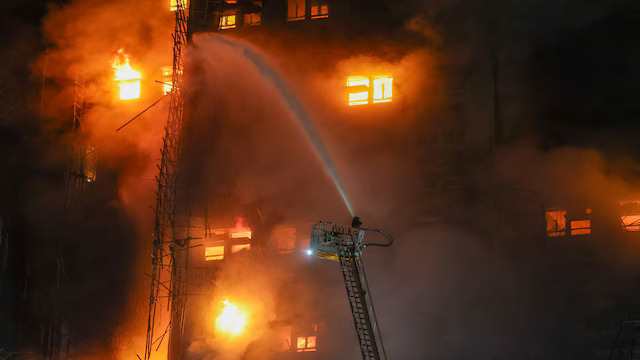
A catastrophic fire tore through the Wang Fuk Court housing estate in Tai Po on November 27, 2025, killing dozens and leaving many more missing as emergency crews worked through the night to control the blaze.
Authorities have arrested three senior figures from the renovation contractor, Prestige Construction, on suspicion of manslaughter amid allegations that unsafe materials and renovation practices accelerated fire spread. The eight-block estate, wrapped in bamboo scaffolding and green mesh during year-long maintenance works, housed more than 4,600 residents and is part of a government subsidised home ownership scheme.
Fire crews reported extreme heat, heavy smoke and collapsing scaffolding as they searched upper floors for trapped residents. Investigators seized company documents and electronic devices from the contractor’s offices and identified foam board panels and other combustible materials used to seal windows and external openings during renovation as probable contributors to rapid flame spread.
Local officials also noted that the mesh and plastic coverings used with bamboo scaffolding likely acted as additional fuel and reduced fire service access.
HSE analysis and safety implications
Material selection and cladding risk
The incident reinforces a core principle of fire safety: external building materials and temporary coverings must be specified and installed to resist ignition and prevent vertical and horizontal flame spread. Foam insulation, plastic mesh and improperly rated sealing products can act as accelerants on high rise facades. Where combustible materials are present, fire will exploit vertical channels created by scaffolding and cladding to travel quickly between floors.
Scaffolding, access and firefighter safety
Bamboo scaffolding is a longstanding practice in the region and offers advantages for rapid erection and cost. However, when combined with flammable sheeting and insufficient compartmentation, it can obstruct external firefighting, contribute to falling debris, and create unsafe routes for escape and rescue.
Compartmentation, means of escape and resident preparedness
Many high rise fatalities in façade fires come from smoke and loss of safe egress, not direct flame contact. Effective compartmentation, functioning self-closing fire doors, and maintained escape stairwells are essential. Building managers and contractors must preserve all escape routes during renovation and communicate evacuation plans clearly to residents. Regular drills, clear signage and verified alarm systems reduce delay in decision making during a fire.
Governance, inspection and contractor management
This tragedy showcases weaknesses in enforcement of renovation standards and contractor oversight. HSE systems must require documented material approvals, third party inspection of high risk works, and a permit to work regime for façade interventions. Clients and principal contractors should be held accountable to verify subcontractor competence and material conformity before work begins. Where evidence suggests gross negligence, criminal investigation is appropriate to reinforce deterrence and signal that safety failures have consequences.
Practical recommendations for HSE practitioners and authorities
- Mandate non combustible or fire-retardant temporary cladding and wraps for occupied high rises.
- Require scaffold fire risk assessments and restrict combustible coverings in dense urban settings.
- Enforce permit to work for façade interventions with documented material certificates and third party inspection.
- Maintain unobstructed means of escape and run tenant evacuation drills during major renovation works.
- Strengthen audit and sanction regimes for contractors who substitute or falsify materials.