

Nigeria continues to record alarmingly high road crash rates, with poor infrastructure and weak road safety systems contributing to a mounting public health crisis.
According to recent statistics from the Federal Road Safety Corps (FRSC), the nation registers nearly 5,000 road crash fatalities and over 31,000 injuries annually, with many of these crashes linked to environmental and infrastructure failures, including inadequate or missing road signs.
Poor road signage remains one of the most overlooked contributors to road accidents in Nigeria.
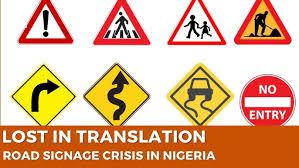
Road signs are fundamental to safe travel, providing motorists and pedestrians with critical information on speed limits, hazard warnings, detours, lane usage and intersection controls.
In many Nigerian cities and rural highways, these signs are either absent, obscured, vandalised or poorly maintained, leaving road users without clear guidance on how to negotiate complex traffic environments safely.
Experts and road safety advocates note that insufficient numbers of clearly visible, reflective and properly placed signs directly increase the likelihood of collisions.
Drivers unfamiliar with road layouts are particularly at risk when approaching sharp bends, sudden lane drops, intersections with right-of-way changes, or unmarked construction zones.
In many cases, motorists only recognise hazards too late because there was no advance warning sign, leading to loss of vehicle control or head-on crashes.
The effects are most pronounced at night and during adverse weather, when lack of reflective signage and poor lighting combine to reduce visibility.
Even where signs exist, they are often tucked away or defaced, making them difficult to read from a safe distance.
In major urban centres with high traffic volumes, the absence of clear signs exacerbates congestion, encourages risky overtaking and increases conflict points between vehicles and pedestrians.
The FRSC recently instructed construction firms nationwide to install standard, reflective road signs and warnings at all work zones after years of avoidable accidents linked to unmarked diversions and hazards. This directive underscores the scale of the problem and the need for systemic improvement.
Beyond physical signage, public understanding and compliance remain weak.
Studies show that many road users have limited knowledge of traffic signs, reducing the effectiveness of even well-placed warnings and regulatory markers.
Addressing Nigeria’s road sign challenges requires coordinated action: government investment in adequate, reflective and strategically placed signs; strengthened enforcement against vandalism; public education on sign compliance; and regular maintenance to ensure signs remain visible and relevant.
These steps are critical if Nigeria is to reduce its devastating road toll and move toward safer highways for all.