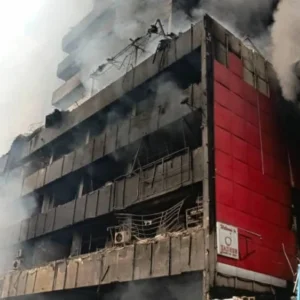


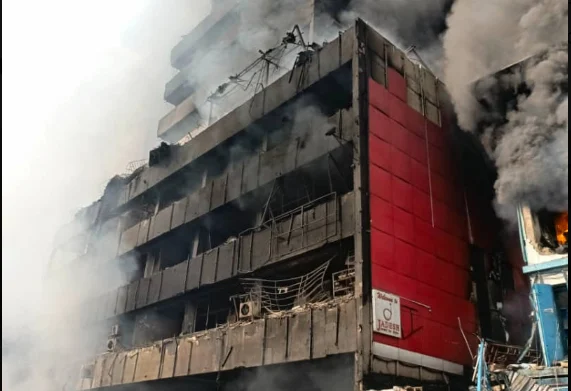
The recent fire at the Great Nigeria Insurance House on Martins Street, Lagos Island, is a stark reminder of how quickly disasters can escalate in urban environments.
The blaze, which started on the fifth floor around 5 pm on Wednesday, December 24, raged for hours before emergency teams could finally declare it under control on Christmas Day.
While no lives were lost, the fire highlighted serious gaps in building safety, storage practices, and emergency preparedness that cannot be ignored.
According to the Lagos State Fire and Rescue Service, the fire began in the fifth-floor warehouse and office space, which was used primarily for clothing materials storage alongside retail outlets.
The presence of highly combustible materials, coupled with poor storage arrangements, allowed the fire to spread rapidly to at least five adjoining structures, including the old Lagos Central Mosque. Firefighters from multiple stations were deployed, but access issues, crowd control challenges, and the conjoined nature of the affected buildings made containment particularly difficult.
Controller General Margaret Adeseye noted that while firefighters arrived at the scene within minutes of the distress call, the operation was hampered by factors beyond their control.
The combination of tightly packed combustible materials, poorly organized storage, and interconnected buildings created a perfect storm that fueled the fire’s intensity and longevity. This case underscores a critical lesson: even the best-trained emergency teams can struggle if buildings are not prepared for potential hazards.
The incident also brings to the fore the essential role of safety professionals in modern workplaces. Fire safety should never be treated as a luxury.
Every building, particularly multi-storey warehouses or mixed-use complexes, must have dedicated safety officers who oversee compliance with fire codes, monitor storage practices, and ensure that emergency exits and firefighting equipment are functional and accessible at all times. Routine fire drills, evacuation plans, and hazard audits are not optional they are lifesaving necessities.
Preventive measures could have significantly reduced the scale of this disaster. Proper organization of combustible materials, installation of fire doors, sprinkler systems, and clear signage for exits are basic safety standards that must be enforced. Buildings must also be designed to prevent fire from spreading to adjacent structures, especially in high-density urban areas. Crowd management during emergencies should be part of safety protocols, as uncontrolled gatherings can slow response efforts and endanger lives.
Another critical takeaway is the importance of public awareness and compliance. Residents, workers, and business owners must understand that fire safety is a collective responsibility. Avoiding hazardous storage practices, maintaining clear escape routes, and promptly reporting potential risks can prevent small incidents from turning catastrophic.
The Martins Street fire should serve as a wake-up call for Nigerian businesses and authorities alike. The destruction of property, disruption of livelihoods, and threat to lives are avoidable if proper safety measures are implemented. Safety is not a secondary concern or a bureaucratic formality it is a core responsibility that requires investment, training, and continuous vigilance.
As Lagos recovers from this incident, one fact is clear: fire safety cannot be an afterthought. Safety professionals must be embedded in every high-risk environment, and regulations must be strictly enforced.
Urban growth, high-density living, and commercial activity demand nothing less. The lessons from Martins Street are not just about one building; they are about the future of urban safety and the urgent need to prioritize human life above all else.