

The write-up is to create awareness among our political leaders and those in authorities that have roles to play in managing disasters especially those of health and contagious diseases. This responsibility should not be with levity or simply ignored because it may come back to hunt the populace.
We need to do the right thing at the right time.
Many may not be aware that Nigeria has a Pandemic plan that was tested in Lagos 24th -28th October 2011 at Eko Hotels & Suites, Victoria Island. It was a proactive move that was hosted by the Government of the Federal Republic of Nigeria, Organized by the United States Africa Command and Funded by the United States Agency for International Development (USAID) and supported by Center for DISASTER and HUMANITARIAN ASSISTANCE MEDICINE (CDHAM) to help prepare nations in Africa and mostly those involved in Disaster Management in Nigeria. It was an eye opener as we all went into different areas of the document using the table top approach to test the plan.
The goal of the exercise was to assist the government of the Federal Republic of Nigeria in identifying gaps in existing pandemic plans, facilitate the development of a comprehensive national pandemic preparedness and response plan, and lay the groundwork for building future disaster response capacity.
It is my strong believe that most if not all the recommendations were not implemented.
The reason for this is unknown, however, we need to ensure as a nation that disaster or incidents that leads to loss of lives should be given priority through preparedness, we can now attest to the fact that anybody can be impacted. Your present position as President, Vice President, Governors, Senators or top government functionaries will not exclude you from some of these disasters, even wealth becomes useless at a point.
The basic requirement for disaster management is love of human lives, which is also the fundamental objective of Business Continuity. When a nation and most government functionaries are focused on money or just lacked necessary push or knowledge such country will not or cannot grow to its full potentials.
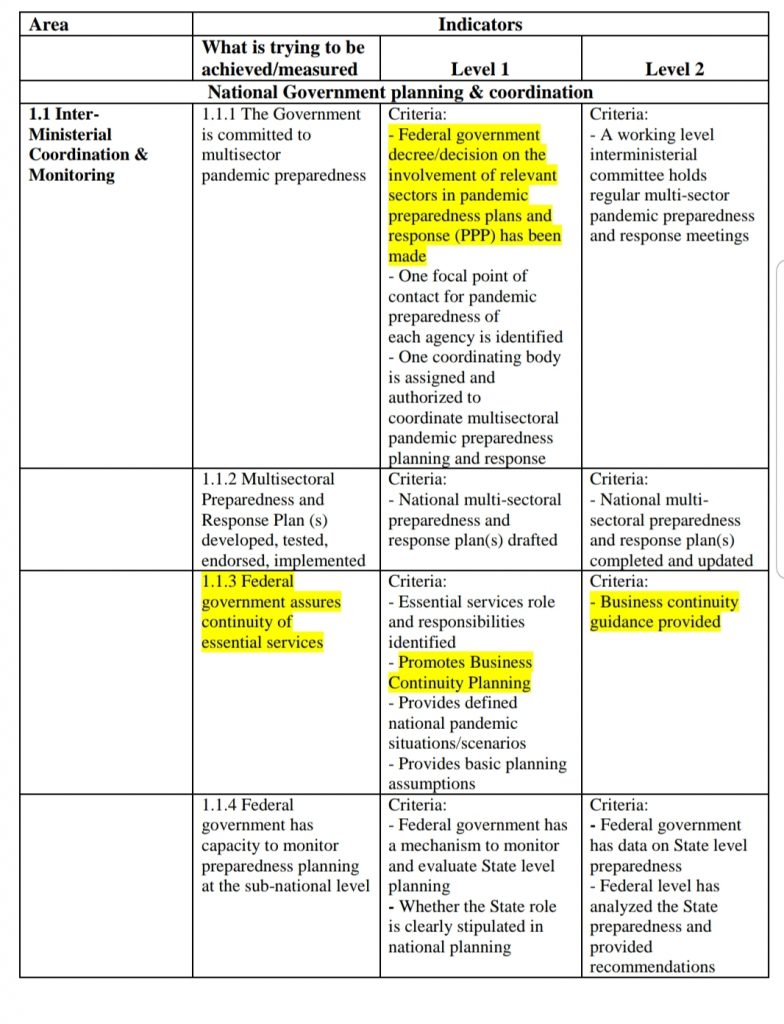
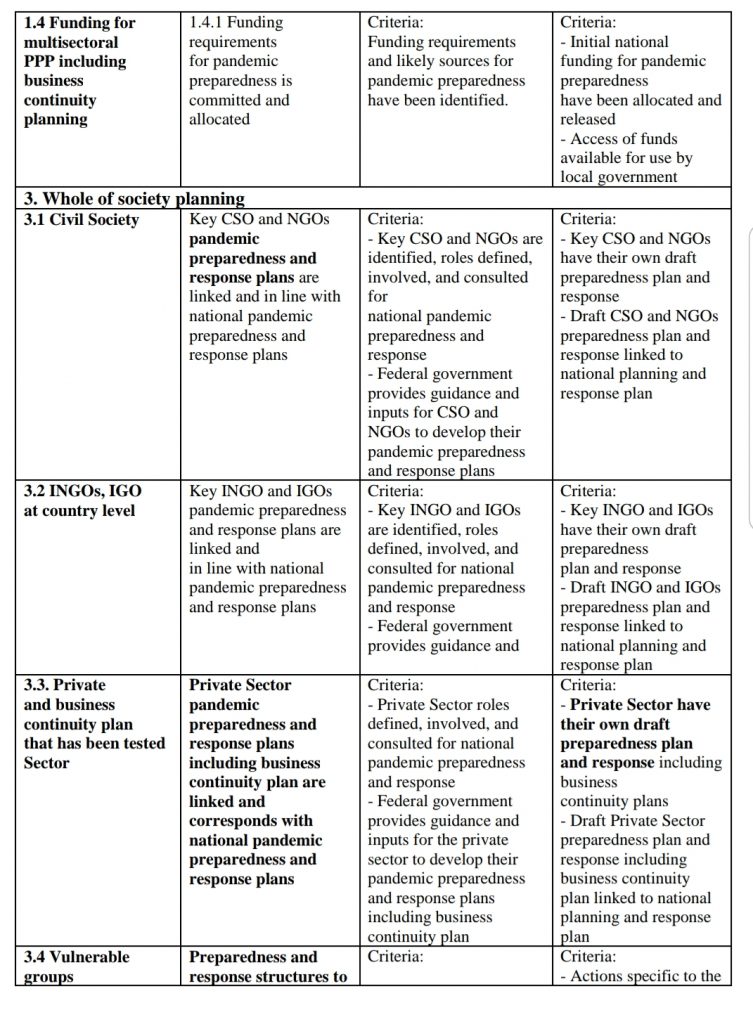
The conference was titled Nigerian Pandemic Disaster Response Tabletop Exercise. At the opening of the conference, I asked a question which was not answered that ‘80% of those in this hall do not understand Business Continuity, How will the reason of our gathering be successful, because Pandemic Plan is supposed to be built on Business Continuity’. I did not know at that time that the document to be exercised has Business Continuity mentioned 43 times.
The same way I am trying to point the attention of stakeholders to this fact. I will beseech us not to ‘beat our chest’ that we are doing well. We are very good at putting things in place within short time, the questions is will all this things last, especially if we ignore what we have in our own book; recommendations of what to do before a pandemic which is called PREPAREDNESS.
Recommendations within the NIGERIAN NATIONAL INFLUENZA PANDEMIC PREPAREDNESS AND RESPONSE PLAN.
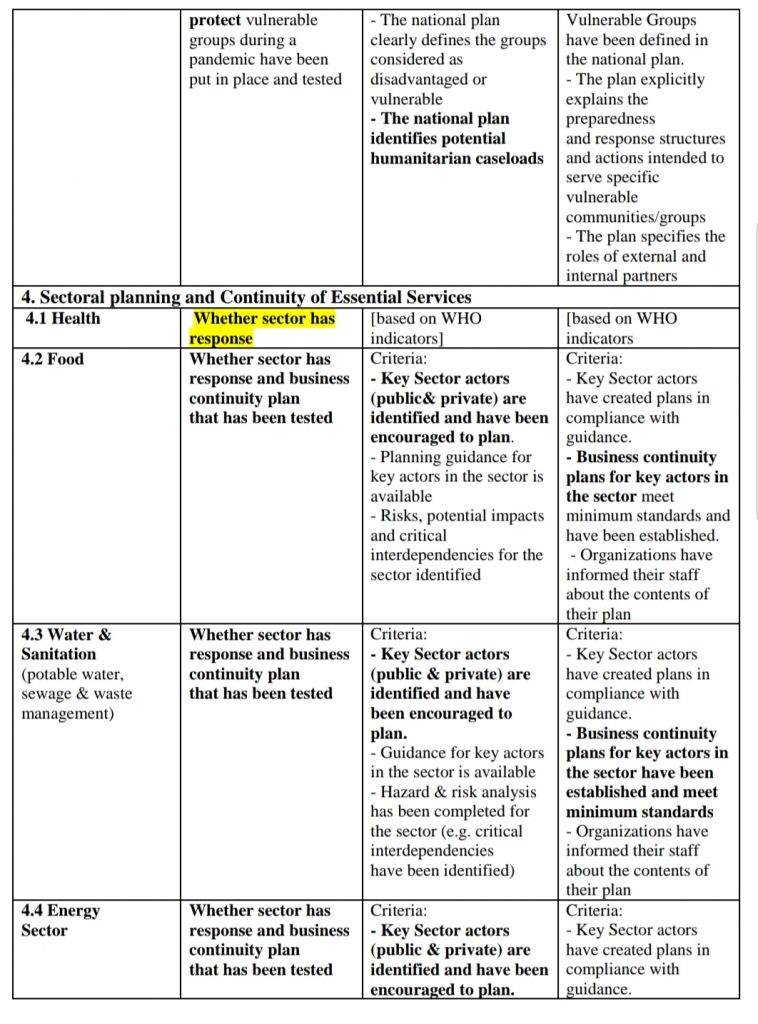
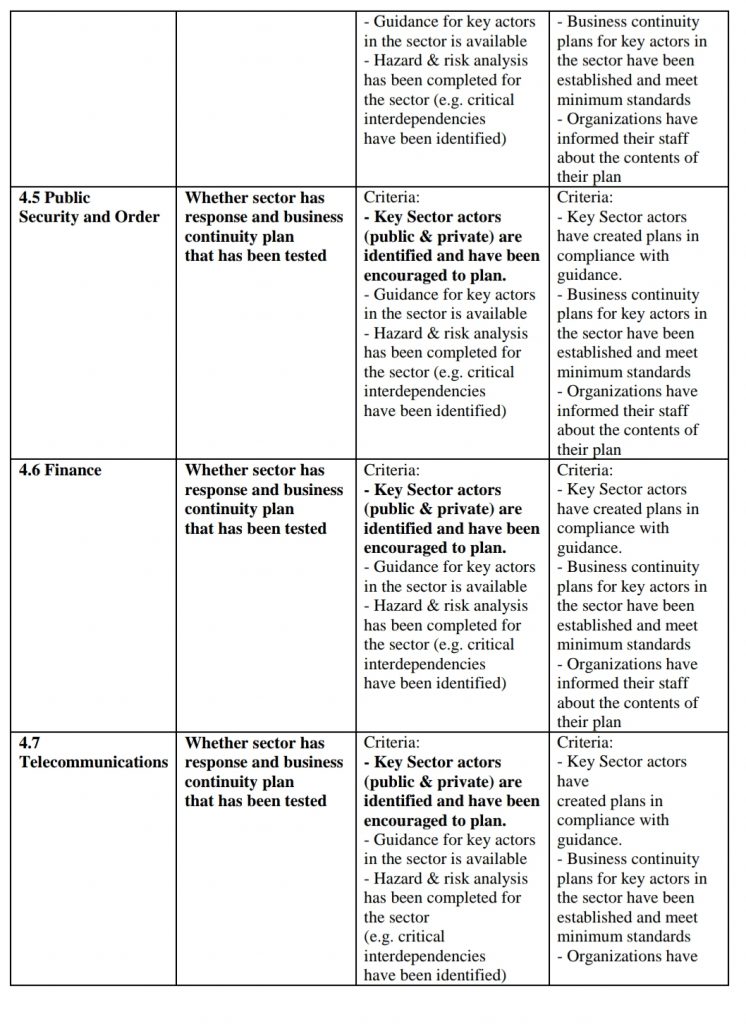
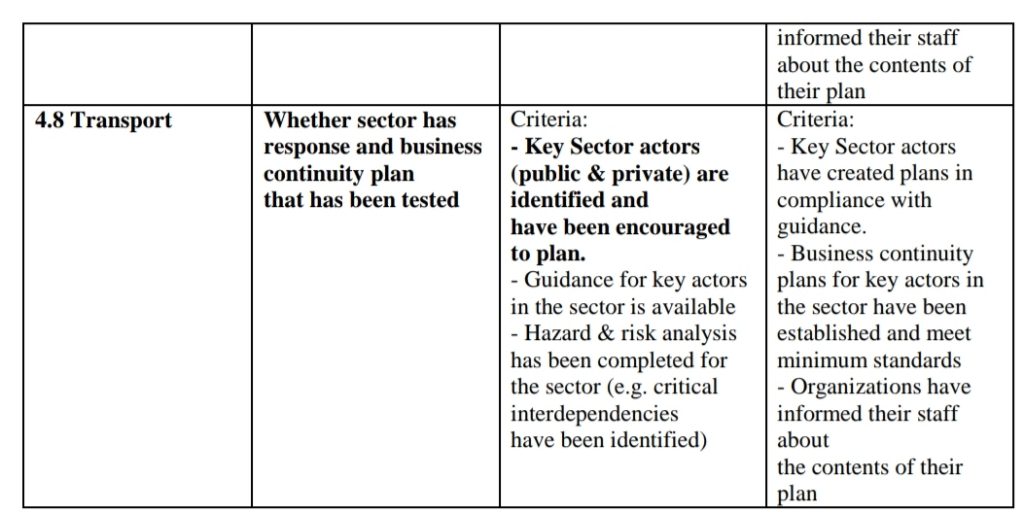
Why Business Continuity
Business continuity is an ongoing process to ensure that necessary steps are taken to identify the impact of potential losses and maintain viable recovery strategies, recovery plans, response capability and continuity of services. Business Continuity cuts across all sectors of the economy as seen from the recommendations.
Business Continuity knowledge should be the basic requirement to successfully manage disasters because it takes you through very strong foundation on how to plan for disaster, mitigation, responding and returning the business back to normalcy. We need to know more and ask why it is a basic requirement.
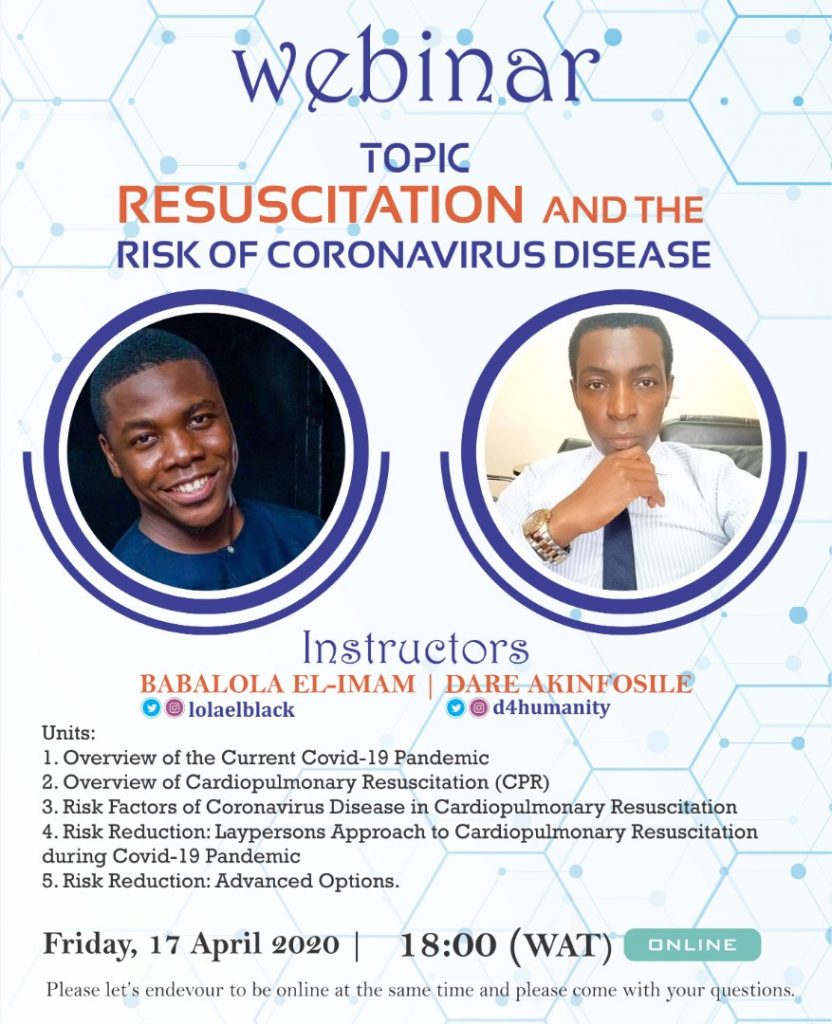
Most of the decisions being taken now are costly, not integrated and we do not have a structure in place. The question is, in the next two years, can we afford another pandemic? The first we had (Ebola) took two lives, the present Covid-19 is in hundreds as I write, Can we wait sincerely for the third? What will be the impact? God in his mercy has helped our nation. We need to help ourselves through preparedness to avoid future mass casualties.
The purpose of writing this article is to help public servants, top officials of Federal, State and Local government who may be uncertain of what actions to take with this type of incident and how to plan for it.
We should not be kept in the dark, disaster management should be bottom up and not top down.
We do not need to ‘import’ experts from abroad as we have experienced and certified business continuity professionals who can help in guiding and helping our public and other stakeholders in preparing by developing sound business continuity plans.
 Philip Keshiro (DRI Nigeria), Consultant, Course and Exam Provider, Representative of Disaster Recovery Institute International USA.