


General Road Safety Rules Everyone Should Abide With is a very essential topic, it comes to road and safety, it is very important that every individual is aware of everything that can lead to an accident.
While individual safety is very important, we must also emphasize the fact that our ability to follow and obey road safety guideline is very essential to the safety of others.
Below are safety rules both drivers and individuals should be aware of:
1. Keep To Your Left:
Drive or ride within the left side of the road and let other vehicles overtake you from the right side.
2. Stay Left When You Turn Left:
When turning towards left, start with approaching the curb from the left-most lane and ensure there’s enough distance for oncoming vehicles to pass.
3. Turn Right:
Come to the centre of the road before you start turning right, but when going around the curb, try to stay towards the left-most part of your lane to avoid contact with oncoming traffic.
4. Overtake from the right side all the time.
When being overtaken by another vehicle, never increase your speed to prevent the other driver from overtaking you.
Be extra careful on intersections. Also, when passing through them, ensure your vehicle doesn’t cause inconvenience to other road users.

5. Right of Way:
Ensure to always give a right of way to vehicles on intersections by letting them continue without stopping in that particular direction in which you are about to proceed.
6. Emergency Vehicles
It is your responsibility to give way to emergency services vehicles such as fire engines and ambulances.
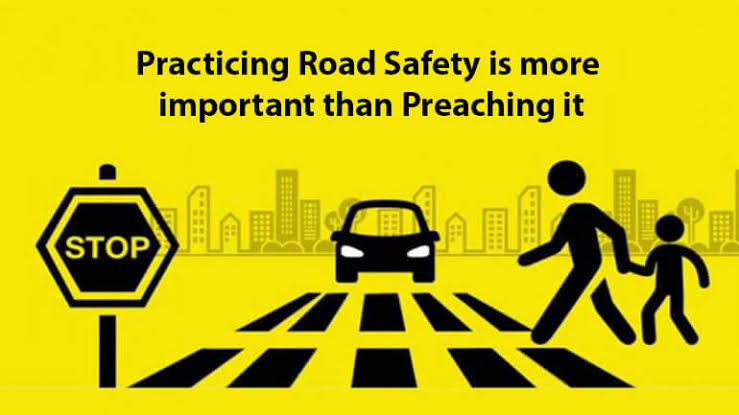
Pedestrians have the right of way at pedestrian crossings or zebra crossings. Drivers and the individuals at the wheel should always ensure those rights are not taken away from pedestrians.
“U” Turns – U-turns can only be taken when there is no warning sign nearby. You give a proper indication to other vehicle drivers that you are going to take a U-turn.
NOMINATE HERE FOR AFRISAFE AWARD 2021
7. Always use indicators to let other road users know about the planned change in the direction of travel.
If your vehicle indicators get damaged without any warning, use hand signals by signing through your window, also make sure you repair the damaged indicator as soon as possible.
8. Parking:
Make sure you do not park your vehicle in such a way that it causes any hurdle or disturbance to any other road users.
9. Registration of plate number:
Your vehicle’s registration plate should be visible at all times. In case it is broken or damaged, you need to get it replaced at the earliest. Driving a vehicle with its registration number not being visible is a serious offence.

10. One-way Roads
Ensure to drive only in the permissible direction on a one-way road. Also, never park your vehicle in reverse on a one-way street.
10. Stop Lines:
Always stop your vehicle behind the stop lines. On roads with no stop lines, make sure your vehicle comes to a halt before the Zebra-crossing.
11. Towing:
Towing of vehicles closer to other vehicles on the road should be prohibited. However, vehicles that are mechanically disabled and those confiscated by the police are exceptions to this rule.
12. Noise with horning
Drivers should not horn needlessly or excessively or use them in no-honking zones like hospital zones and school zones, etc. Also, one should not drive with non-OEM-spec silencers.
Traffic lights and signs should always be obeyed. One should respect instructions given by a traffic cop when there are no traffic lights available.
13. Safe Following Distance:
Always keep a safe distance from the vehicle in front of you as this will give you enough time to come to a stop in case the vehicle in front brakes suddenly.
14. Right of way on Steep Roads
When going up on an incline, you have the right of way as it might be difficult for you to stop and regain momentum. The vice versa holds true when you’re driving downhill.
15. Obstruction of View:
You should always have a clear view of the road ahead. Therefore, your car’s windshield should not have stickers that might obstruct your view.
Passing pedestrians, do not drive at more than 25 km/hr, when you pass a procession, meeting, strike or march.
16. Tractor and Goods Carriages:
It is prohibited to carry passengers on a tractor or a goods carrier.
17. Loading:
Overloading a vehicle is not only dangerous but even illegal. Therefore, one should not carry more than a permissible number of passengers or excessive luggage that the vehicle isn’t designed to carry.
18. Dangerous Materials:
One should not carry explosives, inflammable or harmful substances as they are a fire hazard.
19. Driving in Reverse:
When driving in reverse, you should make sure you do not cause annoyance to any other people on the road.
Essential Documents – Always carry the following documents – Driving License, Registration Certificate of the Vehicle, Insurance Certificate, Fitness Certificate (in case of commercial vehicle), Tourist Permit (in case of commercial vehicle) and PUC Certificate.
Additional Regulations – In addition to the above, the drivers should be aware of all the road safety rules, such as those of speed limit, one-way streets, etc.
Road safety rules and guideline are very straight-forward and easy to obey, regardless of how busy we find ourselves, every individual must ensure to abide by this principle to promote the safety of both ourselves and others .