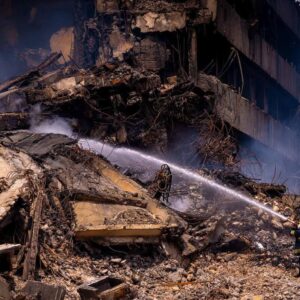
Swift intervention by the Lagos State Fire and Rescue Service prevented loss of life and extensive property damage following a fire outbreak on Pipeline Road, off Ekoro Road, Abule Egba, on Monday afternoon.
According to the Lagos State Fire and Rescue Service, in a statement signed by the Controller General, Margaret Adeseye, on January 5, the distress call was received at approximately 13:08 hours, prompting the immediate deployment of firefighting teams from the Agege and Abesan Fire Stations, who arrived swiftly and brought the situation under control.
Preliminary findings indicate that the fire originated in an open space used for local recycling activities and later spread to a nearby residential bungalow and a mini church.
The prompt and coordinated response of firefighters ensured the blaze was contained before it could escalate further within the community.
One adult female who suffered shock at the scene was immediately attended to and stabilized by emergency responders. No fatalities were recorded.
Investigations are ongoing to determine the cause of the incident, as the Lagos State Fire and Rescue Service reaffirmed its commitment to safeguarding lives and property while urging residents to strictly adhere to fire safety regulations.
The Abule Egba fire incident again highlights the persistent risks associated with informal and poorly regulated activities within residential areas. Open recycling spaces, especially those involving combustible waste, plastics or metals, often operate without basic fire prevention controls, clear separation distances or emergency planning.
When such activities are sited close to homes and places of worship, a minor ignition can quickly escalate into a community-wide emergency. This pattern has been observed repeatedly across urban centres, where land use conflicts and weak enforcement increase exposure to preventable hazards.
The incident also reinforces the critical importance of rapid emergency response systems in reducing casualties and damage. The swift mobilisation of the Lagos State Fire and Rescue Service, supported by proximity of functional fire stations, made the difference between a controlled incident and a large-scale disaster. Effective communication channels, timely distress calls and trained responders remain central pillars of urban fire safety. However, emergency response alone should not be the primary line of defence, as prevention remains more effective and less costly than post-incident intervention.
To reduce future occurrences, stronger regulatory oversight of informal recycling operations is essential, including mandatory fire risk assessments, controlled waste handling practices and enforcement of buffer zones between hazardous activities and residential structures. Community awareness campaigns should also be intensified, educating residents on early fire detection, safe storage of flammable materials and prompt reporting of emergencies. Additionally, urban planning authorities must collaborate with HSE agencies to ensure that high-risk activities are properly zoned, monitored and supported with safety infrastructure. These measures, if sustained, can significantly lower the frequency and severity of similar incidents across Lagos and beyond.