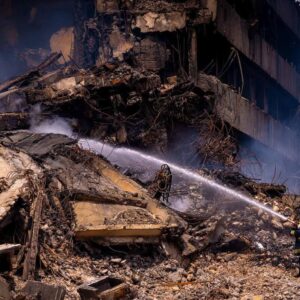

The Lagos State Fire and Rescue Service hereby provides a comprehensive update on the fire incident at the Great Nigeria Insurance (GNI) Building, incorporating the most recent briefing by the Governor of Lagos State, Mr. Babajide Sanwo-Olu.
Following a second on-site assessment by Mr. Governor on January 2nd, 2025, the Lagos State Government has constituted a Technical Recovery and Demolition Committee, chaired by the Honourable Commissioner for Special Duties and Inter-Governmental Relations.
The committee is tasked with developing and implementing a controlled and safe demolition plan for the affected structure and its immediate surroundings in the shortest possible time, while prioritising public and responder safety.
Current Situation on Ground
- The Lagos State Fire and Rescue Service, alongside sister emergency agencies, remains fully deployed on-site.
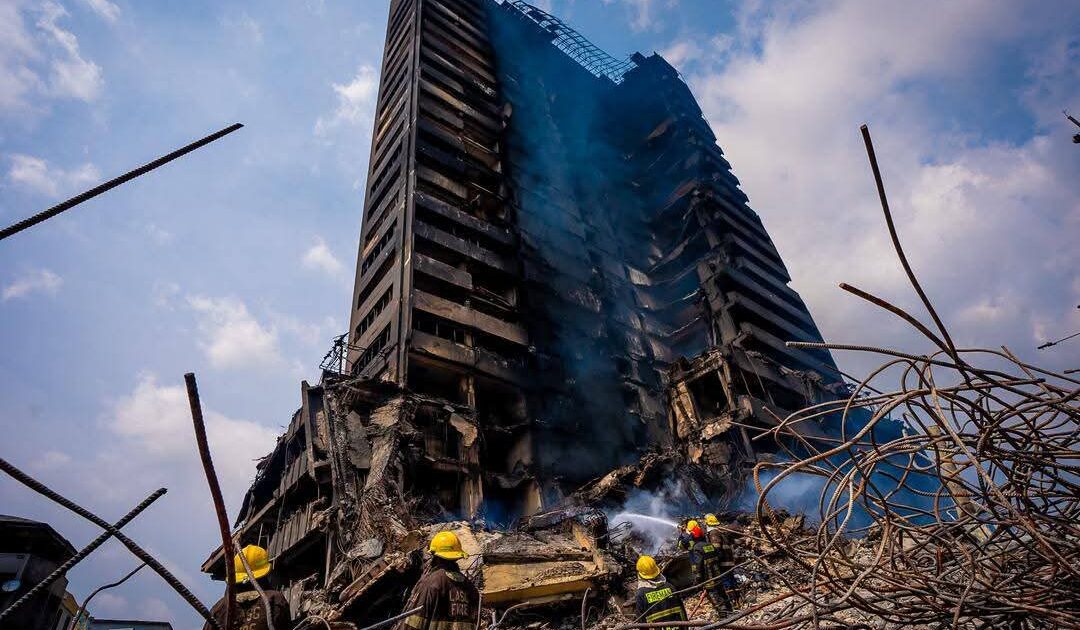
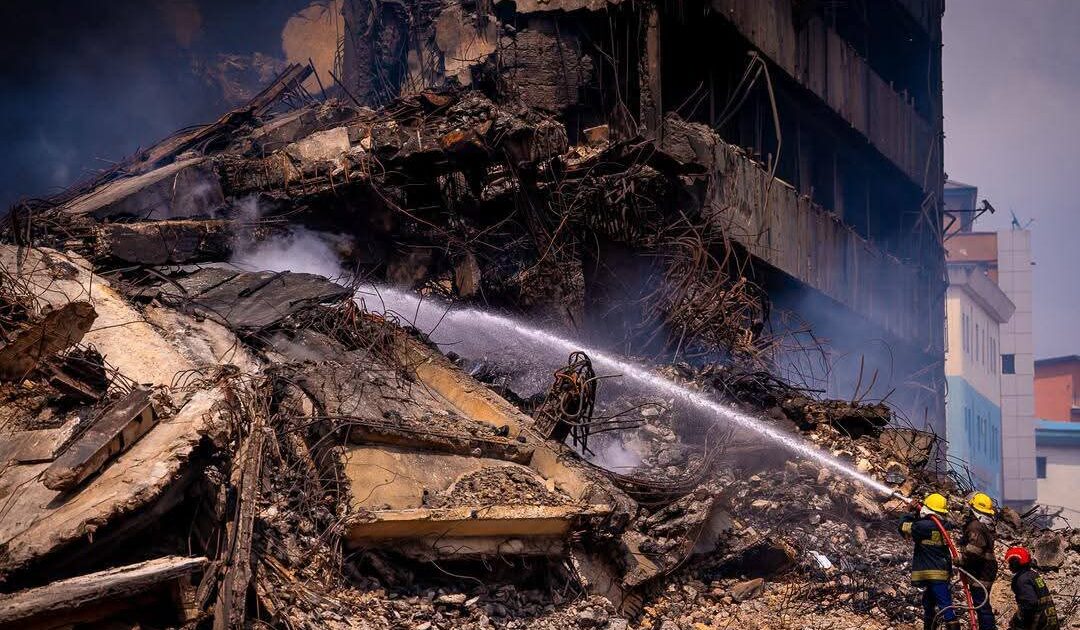
- The incident scene is highly sensitive and volatile, with substantial rubble still in place.
- There are intermittent pockets of fire, primarily originating from combustible materials such as textiles and clothing stockpiled within the building, not from the structural elements of the building itself.
- These materials are buried deep within the debris, and accessing them requires extreme caution and specialised technical planning.
It is important to clarify that:
- The presence of these pocket fires does not pose immediate external danger; however, improper or hurried evacuation of debris could compromise the already weakened structure.
- The fire has significantly weakened the building’s foundation, rendering it structurally unsafe and unfit for any use.
- Some rubble may currently be providing unintended structural support, and removing it without a carefully sequenced plan could trigger a collapse, endangering first responders.
For this reason, all operations are being conducted in line with global disaster response best practices, ensuring that rescuer safety precedes all other actions. As universally recognised in emergency management, disasters of this nature may take days, weeks, or even months to fully resolve.
Public Safety Advisory
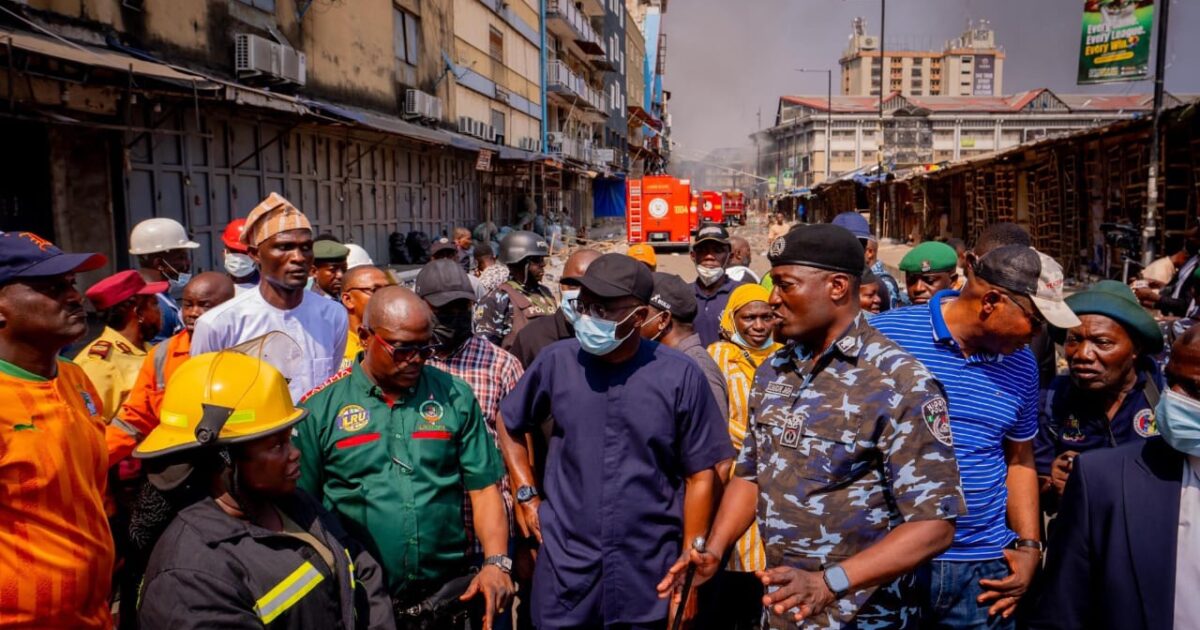
The entire area remains unsafe for commercial or public activity.
- The market and surrounding areas remain closed.
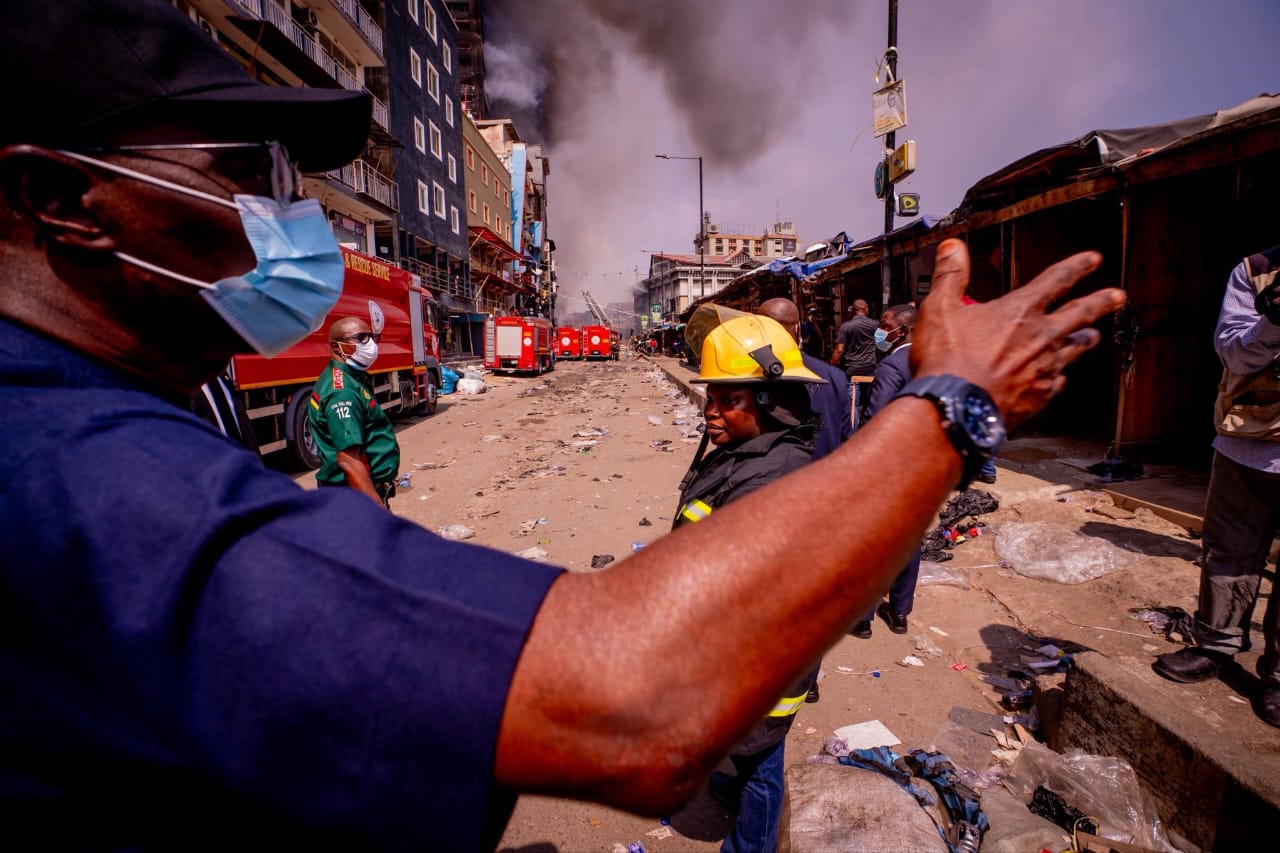
- Only authorised first responders are permitted within the cordoned zone.
- The public is urged to remain calm and cooperative, understanding that their safety is directly linked to the safety of emergency personnel.
An Information Centre has been established at the site to address enquiries from families, stakeholders, and the general public.
Casualties
- 8 fatalities have been confirmed (5 identified, 3 yet to be identified).
- 13 persons have been successfully rescued.
- Search operations continue, particularly in safer sections of the debris, to ensure no one remains trapped.
Preliminary Observations
Preliminary assessments indicate serious fire safety violations, including:
- Overstocking of combustible materials from floor to ceiling with little or no ventilation.
- Absence of proper fire safety infrastructure.
- Unsafe market practices such as generator usage within buildings, shops constructed around transformers, and other hazardous activities.
Such conditions can lead to self-generated heat build-up and spontaneous ignition, even without external triggers.
Global Context
For perspective, similar complex fire recovery operations have occurred worldwide. Notably, firefighting and recovery operations at the World Trade Center (Ground Zero) in New York lasted over 100 days, with underground fires officially extinguished nearly three months after the incident, and full recovery concluding more than eight months later. These realities underscore the complexity and time-intensive nature of large-scale structural fire incidents.
Conclusion
The Lagos State Fire and Rescue Service reassures the public that all actions being taken are deliberate, professional, and safety-driven. Operations will continue until ground zero is fully reached, all risks are eliminated, and the incident is conclusively resolved.
We appreciate the patience, understanding, and cooperation of Lagosians during this period.
Your safety is our priority. A safe rescuer ensures a safe rescue.
Margaret Adeseye
Controller General
Lagos State fire and Rescue Service
January 3, 2026