

Ways to curb or mitigate safety risk in the aviation sector
Risk and hazard are definitely common in every area of safety. The attitude of professional and people in the organization will determine if it has long-term or short-term damage. The effect of these changes will also determine the result which the Organization will get based on their method of fixation. Risk a lot of time also means the composite likelihood and severity of something happening, as
A specific occurrence that is bad/undesirable, as in a “risk occurrence.
Does mitigation mean lessening likelihood/severity or mitigating a specific risk occurrence? In fact, it can and often does mean both at the same time.
Below are various ways individual organizations can curb or reduce the effect which risk and hazards can place on the growth and development of the organization.
1. Reduce the likelihood or severity.
Organization have various ways to fix risk and hazard in order to promote safety. These involving reducing the likelihood and/or severity involve either:
(passive) Keeping particular action, behavior, procedure, task, etc., to a minimum; or (active) Implementing actions that actively reduce risk.
It is the most common method used to mitigate risk in aviation safety management systems. Risk reduction happens by either:
2. Avoid the Risk
One of the multiple ways to reduce risk and hazard in aviation is to avoid it, most especially in a situation where those duties can be performed using various methods.
Risk avoidance is a strategy that is very common in aviation SMS programs. It is probably preferable where applicable and convenient.
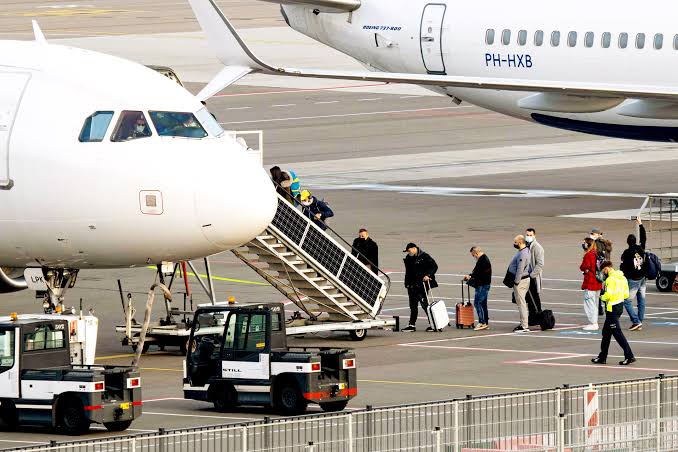
Risk avoidance simply entails limited or non-participation in activities that could lead to a particular potential hazard or risk occurrence. Where possible, it is the best method to mitigate risk in aviation safety management systems.
This is extremely effective in removing potential problems from aviation SMS and offers a high degree of assurance of reduced exposure.
3. Transfer of Risk
Risks need to be owned and managed by either you or another party. What ownership means is that, for a particular risk, the owner is first in line for making sure something bad doesn’t happen.

One way to mitigate risks in your operational environment is to transfer a risk to another, more capable party, such as one of your vendors. For example, one common real-world scenario is for aviation service providers to transfer certain risks too. Each party must be subjected to ensuring things are in line with what is expected of them.
4. Risk Distribution
Organization should ensure that risk and its effect are distributed among the company. It simply involves distributing hazards mechanisms into separate locations, roles/duties, or barriers. Most commonly, risk distribution involves breaking risks up into different locations. This method does not only help to reduce the risk and hazard that occurs but also help with searching and fixing them on time.